


Dwarfs vs. dwarves trips up more writers than you’d think. Both spellings are correct. The trick is knowing which one fits your sentence.
Science writers stick with dwarfs. Fantasy fans lean toward dwarves. Neither camp is wrong, they just serve different worlds. This guide breaks down the meaning and usage difference so you never second guess your spelling again.
Quick Answer: Dwarfs or Dwarves?
Here’s the short version. Dwarfs is the standard plural, used for people, verbs, and scientific contexts like astronomy.
Dwarves is the fantasy spelling. J.R.R. Tolkien popularized it for his stories, and now it’s the go to plural for fantasy creatures in books, games, and movies.
So if you’re writing about dwarf stars or someone with short stature, pick dwarfs. If you’re deep in a fantasy novel with axe wielding warriors, dwarves fits better.
Why People Confuse Dwarfs And Dwarves
The confusion makes sense. English usually has one accepted plural, not two competing ones. That alone throws people off.
Add pop culture into the mix. Snow White gave us seven dwarfs. Tolkien gave us fantasy dwarves. Both versions are everywhere, so readers pick up mixed signals from childhood onward.
This is why so many people search for the correct plural form before hitting publish. It’s not a silly question. It’s a real gap in how English handles this specific word.
What Does Dwarfs Mean?
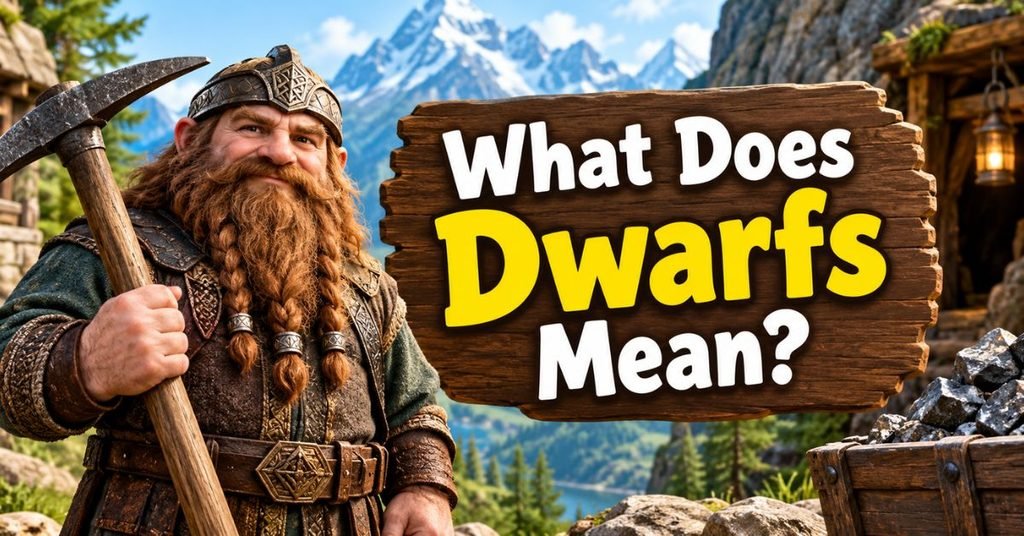
Dwarfs is the traditional plural of dwarf, following normal English plural rules. It also works as a verb, which dwarves never does.
This word shows up in real-world contexts. Think biology, astronomy, and everyday descriptions of small size or stature.
Also Read : Midday vs. Mid Day: Which Spelling Should You Use? 2026
Dwarfs As A Noun
As a noun form, dwarfs refers to people or things that are unusually small. A garden might have dwarf trees. A galaxy might contain dwarf stars.
This usage is neutral and factual. It carries no fantasy connotation at all.
Dwarfs As A Verb
Here’s something many people miss. Dwarf can act as a verb, and dwarfs is its present tense form.
For example, a skyscraper dwarfs the buildings around it. This means it makes something smaller by comparison. Dwarves cannot do this job, ever.
What Does Dwarves Mean?
Dwarves is the plural tied to folklore creatures and mythological beings. Tolkien’s Middle earth books cemented this spelling in modern fantasy novels.
Today, dwarves shows up across fantasy movies, fantasy games, and tabletop adventures. It signals a specific tone, one full of magic, legend, and imagination.
Unlike dwarfs, dwarves has zero scientific use. You won’t find astronomers writing about dwarves. It lives entirely in fictional worlds.
Meaning And Usage Difference
The core difference isn’t really about grammar. It’s about the world your sentence lives in.
Dwarfs belongs to reality. People, plants, stars, and comparisons all use this spelling. Dwarves belongs to imagination, home to small humanoid creatures from legend and lore.
Mixing them up doesn’t break grammar rules, but it does send the wrong signal. A science article using dwarves might confuse readers or look unpolished.
Also Read : Humorous vs Humerous: Which One Should You Use? 2026
Tone, Context, And Formality
Formal, factual writing almost always leans on dwarfs. News articles, textbooks, and medical content stick to this spelling without exception.
Dwarves carries a more casual, imaginative tone. It fits storytelling tone perfectly, especially in fiction aimed at fans who already know the fantasy genre’s conventions.
Think of it this way. Dwarfs sounds like a report. Dwarves sounds like a story being told around a fire.
Which One Should You Use?
Ask yourself one simple question. Are you writing fact or fiction?
Factual writing about people, plants, or space calls for dwarfs. Fiction packed with mythical beings and magic calls for dwarves.
Still unsure? Picture your reader. A gamer expects dwarves. A science teacher expects dwarfs. Match the word to the audience in front of you.
When One Choice Sounds Wrong
Some swaps feel instantly off. Calling Snow White’s companions “seven dwarfs” sounds fine because Disney chose that spelling originally.
But describing dwarf planets as “dwarve planets” would sound strange to any scientist. The scientific term never uses the fantasy spelling, not even once.
Flip it around too. A fantasy game describing “dwarf warriors” instead of dwarves can feel flat to genre fans who expect the traditional fantasy plural.
Alao Read : Crowler vs Growler: Which Keeps Beer Fresher? 2026
Common Mistakes And Quick Fixes
Small spelling slips can hurt your credibility fast, especially in scientific writing or genre fiction where readers notice details.
Here are the three mistakes people make most often, along with quick fixes for each one.
Mistake 1: Using Dwarves For Astronomy
White dwarfs and brown dwarfs are official astronomy terminology. Never write “white dwarves,” astronomers simply don’t use that form.
Fix: Stick with dwarfs whenever stars or planets are involved, no exceptions here.
Mistake 2: Using Dwarfs For Fantasy Creatures
Writing “seven dwarves” for Tolkien style fantasy characters ignores established genre convention. Fans notice this inconsistency quickly.
Fix: Use dwarves for fictional characters in fantasy settings, especially anything inspired by Tolkien’s world.
Mistake 3: Assuming Only One Plural Is Correct
Some writers think one spelling is simply wrong. That’s not true, both forms are correct depending on context.
Fix: Match your spelling to your subject matter, not to a personal preference or old habit.
Everyday Examples
Seeing real sentences helps the difference click faster than any rule ever could.
Science Examples
Astronomers classified the object as one of many dwarf stars nearby. Pluto remains the most famous of all dwarf planets discovered so far.
Fantasy Examples
The mountain dwarves guarded their ancient treasure for centuries. Fans of fantasy characters instantly recognized the armored dwarves marching into battle.
General Examples
The new tower dwarfs every building downtown by comparison. His garden features several dwarf apple trees along the back fence.
Dwarfs Vs. Dwarves In Pop Culture
Pop culture is exactly why this debate refuses to die down. Movies, games, and books each pick a side.
Disney’s 1937 classic locked in dwarfs for millions of viewers. Decades later, Tolkien’s books and the Peter Jackson films trained a whole new generation to expect dwarves instead.
Video games mostly follow Tolkien’s lead. Titles built around fantasy creatures, quests, and kingdoms almost always print dwarves on the box and in the lore.
This split isn’t random confusion. It’s two separate traditions running side by side, each with its own loyal audience and its own spelling habits.
How Search Engines Treat Dwarfs Vs. Dwarves
Google understands both spellings and treats them as related searches rather than separate topics entirely.
That said, user intent shifts the results you see. Search dwarfs and you’ll likely get science pages mixed with grammar explainers.
Search dwarves and fantasy wikis, gaming forums, and Tolkien fan sites tend to dominate the page instead.
This matters for writers chasing rankings. Using the wrong spelling in your title could pull in the wrong audience, or worse, none at all.
Additional Context: Regional And Style Guide Preferences
Style guides don’t always agree, and that’s worth knowing before you commit to one spelling everywhere.
Most modern general plural usage in journalism favors dwarfs across the board. It’s simpler, follows standard English rules, and avoids confusion in mixed audiences.
Fantasy publishers, though, often favor dwarves as a standard English exception, purely for branding and genre tradition passed down since Tolkien’s era.
British and American English don’t split much on this word, which is rare for English spelling debates. Both regions treat dwarfs as the default and dwarves as the fantasy exception.
Editors reviewing manuscripts should flag inconsistent usage within the same document. Switching between dwarfs and dwarves mid book, without reason, reads as a careless mistake rather than a stylistic choice.
Why This Distinction Matters For Writers
Getting this right does more than avoid embarrassment. It builds trust with readers who know the subject well.
A science blog that writes dwarves instead of dwarfs signals sloppy research to anyone with astronomy knowledge. That small slip can cost credibility fast.
Fantasy readers are just as sharp. Fans who grew up on fantasy novels and fantasy games notice the swap immediately, and it can pull them right out of the story.
Precision with small words like this shows respect for your audience. It tells readers you did your homework before hitting publish.
Dictionary-Style Word Details
Verb
Dwarf works only as a verb in its singular root form, with dwarfs as the correct verb form for present tense.
Example: the new stadium dwarfs the old one in size and design.
Noun
As a plural noun, dwarfs covers people, plants, and celestial bodies without any fantasy meaning attached.
Dwarves, meanwhile, stays reserved strictly for fictional creatures in stories, games, and legend based worlds.
Synonyms
Synonyms shift depending on which spelling and meaning you’re working with in your sentence.
Dwarfs
Close synonyms include small, tiny, miniature, and stunted, depending on the exact context you’re describing.
Dwarves
Synonyms here lean toward fantasy creatures, gnomes, and other small people or beings from folklore traditions.
Example Sentences
Short examples make the usage differences easy to remember, even weeks after reading this guide.
Dwarfs
The mountain dwarfs the small village sitting at its base. Scientists studied several dwarfs among the newly catalogued star systems.
Dwarves
The dwarves forged weapons deep within their mountain halls. Three dwarves joined the quest alongside the story’s main hero.
Word History
Dwarf comes from Old English, and its plural naturally became dwarfs through English plural rules.
Tolkien deliberately chose dwarves instead, treating it as an accepted plural form unique to his invented mythology. Readers loved it, and the modern usage stuck permanently within fantasy circles.
Phrases Containing
Certain phrases lock in one spelling permanently, regardless of who’s writing them.
Dwarfs
Common phrases include white dwarfs, brown dwarfs, and dwarf planets, all tied firmly to science.
Dwarves
Common phrases include mountain dwarves, dwarf clans, and magical dwarves, all tied to fantasy storytelling traditions.
Frequently Asked Questions
Are dwarfs and dwarves both correct?
Yes. Dwarfs vs. dwarves are both correct plurals, used in different contexts and settings entirely.
Is it seven dwarfs or seven dwarves?
Disney’s classic film uses seven dwarfs. Tolkien style fantasy typically uses dwarves instead.
Which spelling is used in astronomy?
Astronomy always uses dwarfs, as seen in white dwarfs and dwarf planets terminology.
Is dwarfs a verb?
Yes. Dwarfs can act as a verb meaning to make something appear smaller by comparison.
Should I use dwarves for people with dwarfism?
No. Use dwarfs or little people, since dwarves refers only to fantasy creatures.
Conclusion
Dwarfs vs. dwarves really comes down to context, not personal taste. Dwarfs belongs to facts, science, and real people. Dwarves belongs to fantasy, folklore, and imagination.
Once you remember this simple split, you’ll never hesitate again. Pick dwarfs for anything factual, and dwarves for anything magical. That’s the whole dwarfs vs. dwarves debate, solved in one easy rule you can carry into every piece you write.


2 thoughts on “Dwarfs vs Dwarves: Which One Should You Use? 2026 ”