


Ever typed recieved and then stared at it, wondering if it looked off? You’re not alone. This is one of the most common spelling slips in English, and it shows up in emails, texts, and even job applications.
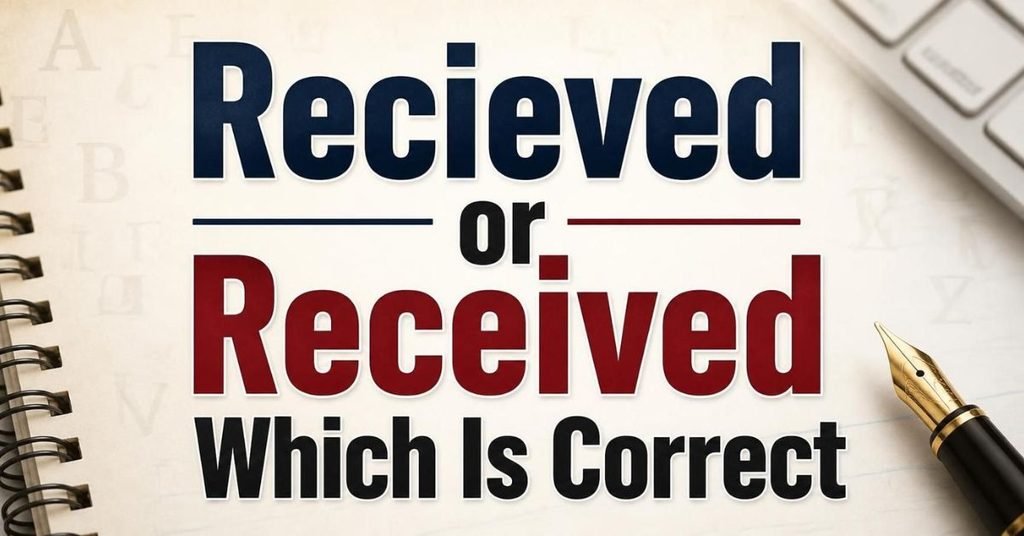
The correct spelling is received. Write it with the “ei” combination every time. The “ie” version is a misspelling, even though it looks like it could be right.
Here’s the good news. Once you know the pattern, you won’t mix them up again. We’ll look at why this error happens, how the word works in real sentences, and a simple memory trick that sticks. By the end, you’ll type it with confidence.
Why Is Received Spelled With EI?
The word comes from the Latin verb recipere, which means to take back or take in. Over time, English kept that “ei” pattern in the spelling. So the spelling is less about logic and more about history.
Think of it like a family name that stayed the same across generations. The sound says “ee,” but the letters don’t follow the sound. That’s why English spelling can feel unfair.
Once you see the root, the word feels less random. You’re not guessing. You’re following a pattern that has been around for centuries.
Why Do People Get It Wrong So Often?
Most people don’t misspell this word because they’re careless. They misspell it because their brain expects “ie” after the “r” sound. Words like believe and field train us to reach for that combination.
Here’s the catch. Your ear hears the same “ee” sound in both words, so the spelling looks like it should match. That’s exactly why the mistake feels natural.
Common reasons people slip include:
- Fast typing on phones, where autocorrect may not catch it.
- Sound-based spelling, where you write what you hear.
- Mixing up patterns, like confusing it with belief or relief.
Knowing the cause helps you fix it. When you pause before typing, your brain can check the pattern instead of guessing.
How the I Before E Rule Fails Here
You may have learned the old saying: “i before e, except after c.” It’s a handy rhyme, but it doesn’t cover every word. In this case, it actually works in your favor.
Received follows the “except after c” part of the rhyme. The “e” comes before the “i” right after the letter “c.” That’s the exception that proves the rule in this word.
Here’s a quick way to remember it:
- Look at the letter before the “ei” or “ie” combination.
- If it’s a “c,” use “ei.”
- If it’s any other letter, you may need to check the word.
The rule isn’t perfect, though. Words like weird and science break it, so don’t rely on it alone. For received, the “c” clue is all you need.
What Does Received Mean?
Received is the past tense and past participle of the verb receive. It means to get something that someone sent, gave, or offered you. You can receive a letter, a gift, a call, or a piece of news.
It can also mean something that is generally accepted as true or standard. For example, a received idea is one that most people already believe. That meaning appears less often in everyday talk, but you may see it in books or formal writing.
Here’s a simple example to show how it works:
“I received your message this morning and I’ll reply by lunch.”
Notice the past tense. The message arrived earlier, so received fits perfectly.
Received Synonyms You Can Use
Sometimes you want to switch things up. Using a synonym can make your writing feel fresh and avoid repetition. Here are some you can swap in.
- Got: Casual and friendly, great for everyday talk.
- Accepted: Works well when you agree to take something.
- Obtained: Suits formal or work writing.
- Collected: Good for items you picked up in person.
- Acquired: Often used for skills, property, or knowledge.
Pick the one that fits the moment. “I got your email” sounds relaxed. “I obtained the documents” sounds more formal. Both are correct, but the tone changes with each choice.
Past Tense and Past Participle of Receive
The verb receive follows a pattern that’s easy once you see it. Its past tense and past participle are both received. That means the same spelling works in two places.
Here’s how it looks in a sentence:
- Past simple: “She received the award last week.”
- Present perfect: “She has received three offers so far.”
You don’t need to memorize a new form. The same spelling does the job in both cases. That’s one reason it’s worth learning the spelling once and using it everywhere.
Receive and Received in Spanish
If you’re an English learner or a Spanish speaker, you might wonder how this word translates. The Spanish verb is recibir, and it means the same thing as receive. The spelling is different, but the meaning lines up.
The good news is that recibir also uses “ci” and “bi” in a way that matches its own pattern. Both languages share Latin roots, so the words feel related. Learning one can help you remember the other.
For example:
- English: I received your package.
- Spanish: Recibí tu paquete.
Both sentences tell the same story. Only the spelling and grammar shift.
Accept or Receive, and Got or Received
Many people mix up accept and receive. They sound close, and both involve something coming to you. But they mean different things.
Accept means you say yes to something or agree to take it. Receive means something arrives or comes into your hands. In a sentence, the difference is clear:
“I accepted the job offer, and I received the contract today.”
The first action is your decision. The second is the delivery. Keeping that gap in mind helps you choose the right word.
Got and received also overlap, but got sounds casual. In an email to your boss, received sounds more polished. In a text to a friend, got feels natural.
Using Received in Emails, Packages, and Payments
This is where the word shows up most in daily life. You’ll see it in emails, shipping notices, invoices, and messages from your bank. Using it correctly keeps your writing clear and professional.
Here are a few common phrases:
- Received your email: A polite way to confirm a message arrived.
- Received a package: Used when a delivery reaches you.
- Received payment: Common in business and freelance work.
- Received documents: Helpful when you’re confirming paperwork.
- Received feedback: Good for showing you read someone’s comments.
A short note like “Received your documents, thanks” works well in a work chat. It’s quick, clear, and spelled right.
A Simple Trick to Never Misspell It Again
Let’s make this stick. Here’s a memory trick that many writers use. Say the word out loud, then break it into two chunks: “rec” and “eived.” The “ei” in “eived” is the part you want to lock in.
Another trick is to link it to receipt. The word receipt also has “ei” after “c,” and it’s a word you probably type often. If you can spell receipt, you can spell received.
Try writing it three times right now. Your fingers will learn the pattern faster than your brain can explain it.
| Also Read This: |
| Tomorrow vs Tommorow: Which Spelling Is Correct? |
| Trek vs. Treck: Which Is Correct? The Simple Answer |
| Friend vs Freind: Correct Spelling Explained Simply |
Common Spelling Mistakes Around Received
Writers often make a few related errors. Watching for them helps you clean up your drafts fast.
- Recieved: The most common mistake. Always use “ei.”
- Receve: A missing “i” that changes the whole word.
- Recived: Drops a letter and looks sloppy.
- Receiveed: Adds an extra letter, usually from fast typing.
Run a quick check before you hit send. Most spell-checkers flag these, but don’t rely on them completely. Your own eye is still the best tool.
Quick Tips for Formal Writing
In formal writing, precision matters. A misspelled word can make your message look careless, even when your ideas are strong. Here are some habits that help.
- Read your draft aloud. Your ear catches what your eye skips.
- Use a style guide if your company or school has one.
- Check key words, like received, in your final pass.
You don’t need to be perfect. You just need to be consistent. Small fixes add up to a polished, trustworthy message.
Frequently Asked Questions
Is recieved or received correct?
Received is correct. Recieved is a misspelling that many people make. Always use the “ei” version in writing.
Why is received spelled with ei?
The spelling comes from Latin and follows the “except after c” part of the old rhyme. The letters stayed the same as the word moved into English.
What is the past tense of receive?
The past tense is received. The past participle is also received, so you use the same spelling for both.
Can I use got instead of received?
Yes, in casual writing. In emails or formal documents, received sounds more polished and professional.
What is the Spanish word for receive?
The Spanish word is recibir. It means the same thing and shares Latin roots with the English word.
Conclusion: Remember Received Every Time
So, which spelling is correct? It’s received, with the “ei” in the middle. The “ie” version is a misspelling, and now you know why it happens.
You’ve also seen how the word works in real life. You’ll spot it in emails, packages, payments, and feedback. You’ve learned a few synonyms, the past tense, and a simple trick to lock in the spelling. Keep the pattern in mind and use it every time.
The next time you type this word, pause for one second. Check for the “ei” and move on. Got a tricky spelling question of your own? Drop it in the comments, share this with a friend who always second-guesses this word, and tell us which trick works best for you.


2 thoughts on “Recieved or Received: Which Spelling Is Correct? (2026)”