


Ever paused mid-text and wondered whether you should write to or too? You’re not alone. Plenty of people stumble over this exact spot, and the question I Would Love To or Too pops up in emails, chats, and invitations all the time. It looks like a tiny detail, but a small slip can make a message look careless, especially at work.
Here’s the short answer. The correct phrase is “I would love to.” Use too only when you mean also, as in “I would love to come, too.” Stick with that rule and you’ll rarely slip. Let’s clear it up together, one simple step at a time, with plain rules you can use right away.
To or Too
Both words sound alike in speech, and that’s where the trouble starts. The spelling differs, but people often say them the same way, so the eye and ear both get fooled. The good news is that each word has a clear job.
Once you know that job, choosing the right one gets much easier. You’ll stop guessing and start checking.
To vs Too
To is a word you’ll use all day. It shows direction, links verbs, and points to a place or a time. Too shows up less often, but it does a different job: it means also or very.
Think of to as pointing somewhere. Think of too as adding something. If you’re adding an idea, you probably need too.
Difference between To and Too
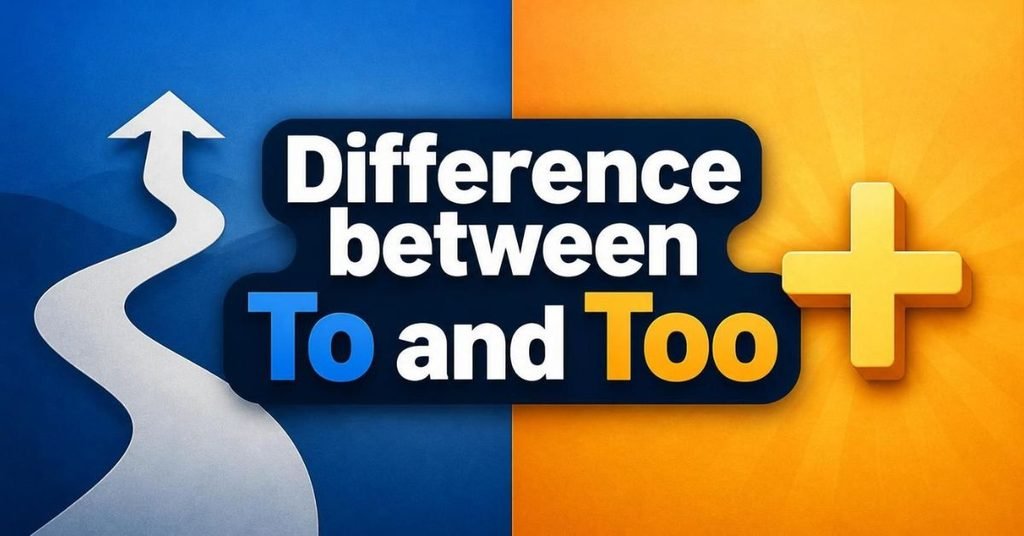
The main difference is meaning. To works as a preposition or an infinitive marker, while too works as an adverb. Mix them up and your sentence says something you didn’t plan.
Here’s a quick check. Ask whether the word means also or very. If it does, you need too. If it doesn’t, you almost always need to.
I would love to or too
This is the question at the center of it all. “I would love to” is the right choice when you accept an invitation or show willingness. Adding too usually belongs after a comma.
Imagine a friend asks, “Want to grab lunch?” You reply, “I would love to.” You’d only say “too” if someone else already said they’d love to, and you want to join in.
I would love to
“I would love to” is a complete, polite phrase. It’s a natural way to show desire or accept an invitation without sounding stiff.
The to here sends the verb forward. Even when the main verb is left out, the phrase still makes sense. For example, “I would love to join you” and “I would love to” both work in the right setting.
I would love to too
You’ll sometimes see “I would love to too” in chats. It’s understandable, but it reads awkwardly. The cleaner version is “I would love to, too.”
The comma separates the extra idea. It tells the reader you’re agreeing with someone who also wants to do something. In very casual texts, “I’d love to, too” works fine.
To or Too Which One Is Correct
For this phrase, to is the correct choice. “I would love to” fits almost every situation you’ll meet. You only need too when you’re joining a group that already agreed.
So the short answer stays the same: to. Use too only when the word means also. Otherwise, your sentence will look like a typo.
Meaning of To
To has several jobs. It can show direction, as in “going to school.” It can show a limit, as in “from nine to five.” It can also introduce a verb, as in “to learn.”
Think of to as a bridge. It connects one thing to another, whether that’s a place, a time, or an action.
Meaning of Too
Too means also or in addition. Say “Me too” when you feel the same way as someone else. It can also mean more than enough, as in “too hot.”
The extra O in too is a handy clue. Think of it as an extra helping, something added on top of the sentence.
Definition of To
In dictionary terms, to is a preposition or an infinitive marker. A preposition links a noun to the rest of the sentence. An infinitive marker comes before a base verb.
You’ll see to in “to the park” and in “to run.” Same spelling, different roles. Don’t stress about the labels. Focus on what the word does in the sentence.
Definition of Too
Too is an adverb. It changes or adds to another word. It can mean also, as well, or excessively.
In “She is too tired,” too means more than is helpful. In “I’m tired too,” it means also. Same spelling, two clear meanings.
To and Too Grammar Rules
The grammar rules for these words are simpler than they look. To needs a noun or a verb after it. Too usually sits before an adjective or adverb, or stands alone at the end of a clause.
Here’s a quick test. If you can swap in also and the sentence still works, use too. If not, use to. That one check solves most mix-ups.
To and Too Examples
Here are a few quick sentence examples. “I’m going to the store.” “I want to learn English.” “I want to learn English too.” “It’s too cold outside.”
Read each one out loud. The sounds match, but the meaning shifts. Reading aloud is one of the fastest ways to catch a mistake.
Correct Usage of To and Too
Correct usage comes down to context. Use to when you show direction, time, or an infinitive verb. Use too when you add a thought or show excess.
Writers who keep a short mental list rarely slip. Yours can be as simple as “to points forward, too adds on.”
To vs Too in Sentences
Let’s put them side by side. “She wants to come.” “She wants to come too.” The first is a plain wish. The second adds that someone else also wants to come.
Notice how one small word changes the whole picture. Swapping them can flip the meaning or make the sentence look wrong.
Common Mistakes with To and Too
The biggest mistake is writing too where to belongs. Many people type “I would love too” in texts. The phrase sounds fine in speech, so the error slips through.
Another common slip is skipping the comma. “I would love to too” looks rushed in a formal email. A quick reread catches most of these errors.
To as a Preposition
As a preposition, to connects a noun to the rest of the sentence. It shows movement, direction, or a recipient, as in “Give it to me.”
You’ll use it constantly. “Talk to your manager.” “Send the file to Sara.” Each time, to points toward a person, place, or thing.
To as an Infinitive Verb
Before a base verb, to forms the infinitive. Examples include to read, to write, and to help. This pattern is called the infinitive form.
In “I would love to help,” the infinitive shows what you want to do. The verb after to stays in its base form, so it never changes for tense.
Too as an Adverb
As an adverb, too modifies adjectives or other adverbs. It often means excessively, as in “The coffee was too hot to drink.”
Notice that too comes right before the adjective. That placement helps you spot it quickly in any sentence.
| Also Read this |
| Recieved or Received: Which Spelling Is Correct? (2026) |
| Friend vs Freind: Correct Spelling Explained Simply |
| Putting vs Puting: Which Spelling Is Correct? |
Too Meaning Also
When too means also, it usually sits at the end of a clause. “I’m coming too.” The word adds one more person or thing to the group.
To test it, swap in also or as well. If the sentence still makes sense, you’ve picked the right word.
Too Meaning Very
Some writers use too to mean more than needed, and it often carries a negative feel. “The room was too loud” means the noise is a problem.
Strictly speaking, this sense signals excess. That matters for tone, because too here usually points to a complaint or a limit.
To Before Verbs
To before a verb is the most common use you’ll meet. It tells the reader that a verb is coming next, as in “I want to try it.”
Keep the verb in its base form. Say “to go,” not “to went” or “to goes.” That keeps your writing clean and correct.
Too at the End of a Sentence
Putting too at the end is common in speech. “Can I come too?” The word adds a light, friendly tone.
When too follows a full clause, add a comma before it. “I would love to, too.” The comma gives the reader a natural pause.
I would love too
“I would love too” is a typo for “I would love to.” It shows up often in texts, where people type fast and skip a second look.
Here’s a quick fix. Say the sentence in your head. If it sounds like you’re saying also, then too fits. Otherwise, go with to.
She would love to or too
The same rule applies when you talk about someone else. “She would love to come” is the standard version.
If another person already agreed, you might write “She would love to come too.” The too adds that she’s joining the others.
I would love to also
“I would love to also” is grammatical, but it’s a bit wordy. The word also repeats an idea that the phrase already carries.
Use it in formal writing if you need to show an extra point. In casual chats, “I’d love to, too” reads smoother and feels more natural.
To or Too Sentence Examples
Try a few quick examples. “I’d love to join the call.” “Can I join too?” “The meeting starts too early.”
Each one uses the word that matches its job. Practice by writing your own sentences and checking the meaning against the rule.
To and Too Spelling Difference
The spelling difference is just one letter. To has two letters, while too adds an extra O. That’s the whole visual trick.
Think of the extra O as an extra piece you add on. When you’re adding something, reach for too.
English Word Confusion
English has plenty of word pairs that sound alike, like their, there, and they’re. To and too belong to that group. The confusion happens because the sound stays the same.
Learn these pairs one at a time. Pick the one that trips you up most and practice it for a week.
English Grammar Rules
Grammar rules feel heavy, but most come down to patterns. Once you spot a pattern, you can use it in new sentences without thinking twice.
For to and too, the pattern is simple. To links and points. Too adds and exaggerates.
To and Too Usage Tips
Three habits help most people. Read your sentence aloud. Ask whether the word means also. Check the word right after to, since a verb there means you’re on the right track.
These habits take only seconds. Over time, you’ll catch the error before anyone else does.
Me Too
“Me too” is a quick way to say you feel the same. It’s common in casual chats and friendly emails.
Use it when you agree with someone’s point. Just remember the word is too, not to.
As Well
As well means the same as also or too. It often sits at the end of a sentence, as in “I’m joining as well.”
It’s slightly more formal than too, so it fits work emails nicely. Both carry the same meaning.
Also
Also is a clear alternative to too when you add an idea. “I’d also love to come” reads polite and simple.
If you’re unsure, swap in also. If it fits, too usually works at the end of the sentence instead.
Infinitive Form
The infinitive form is the base verb with to in front. Examples include to see, to travel, and to finish.
Using the infinitive keeps your sentence flowing. “I would love to travel” sounds natural because the verb follows smoothly after to.
Ellipsis in Grammar
Ellipsis means leaving out words the reader can fill in. “I would love to” often hides a verb like “come” or “join.”
This is why the phrase works so well in replies. Everyone knows what’s missing, so the sentence stays short and clear.
How to Use To and Too Correctly
Start with the meaning. Decide whether your word shows direction, links a verb, or means also. Then pick to or too to match.
A quick habit helps. Read the sentence twice, once silently and once aloud. Mistakes usually jump out on the second read.
When to Use To or Too
Use to when you show direction, time, or an infinitive. Use too when you mean also or excessively.
If you’re still stuck, remember that “I would love to” is almost always right. Add too with a comma only when someone else is involved.
A Quick Memory Trick
Picture the extra O in too as a bonus. A bonus means extra, and extra means also.
Pair it with a simple question: “Can I come too?” Once that sticks, the mix-up rarely comes back.
Why This Mix-Up Keeps Happening
Texting and fast speech blur the difference. The sounds match, and autocorrect doesn’t always catch the wrong word.
Slow down during your reread. Reading slowly catches the word that looks right but feels off.
Frequently Asked Questions
Is it I would love to or I would love too?
The correct version of I Would Love To or Too is I would love to, since too means also.
Can I say I would love to too?
Yes, but add a comma. I Would Love To or Too reads best as I would love to, too.
What does too mean in this phrase?
In I Would Love To or Too, too means also. It tells the reader you share the same wish as someone.
Why do people get confused by I Would Love To or Too?
Both words sound alike in speech. I Would Love To or Too trips people up because the spelling looks similar.
Is I Would Love To or Too okay in work emails?
Yes, and the rule holds. In emails, I Would Love To or Too usually means I would love to, unless you agree with someone.
How can I remember the difference?
Remember the extra O in too means extra. Use I Would Love To or Too with to for plans, and too for adding someone.
Conclusion
So, what’s the final answer? I Would Love To or Too has a clear winner. The correct phrase is I would love to. Use too only when you mean also, like in I would love to, too.
Next time you type a reply, pause for a second. Ask yourself whether the word means also. If it does, too fits. If not, choose to. Practice I Would Love To or Too a few times, and it will feel automatic. Share this guide with a friend who keeps mixing them up, or drop your own memory trick in the comments.


3 thoughts on “I Would Love To or Too: Which One Is Correct?”